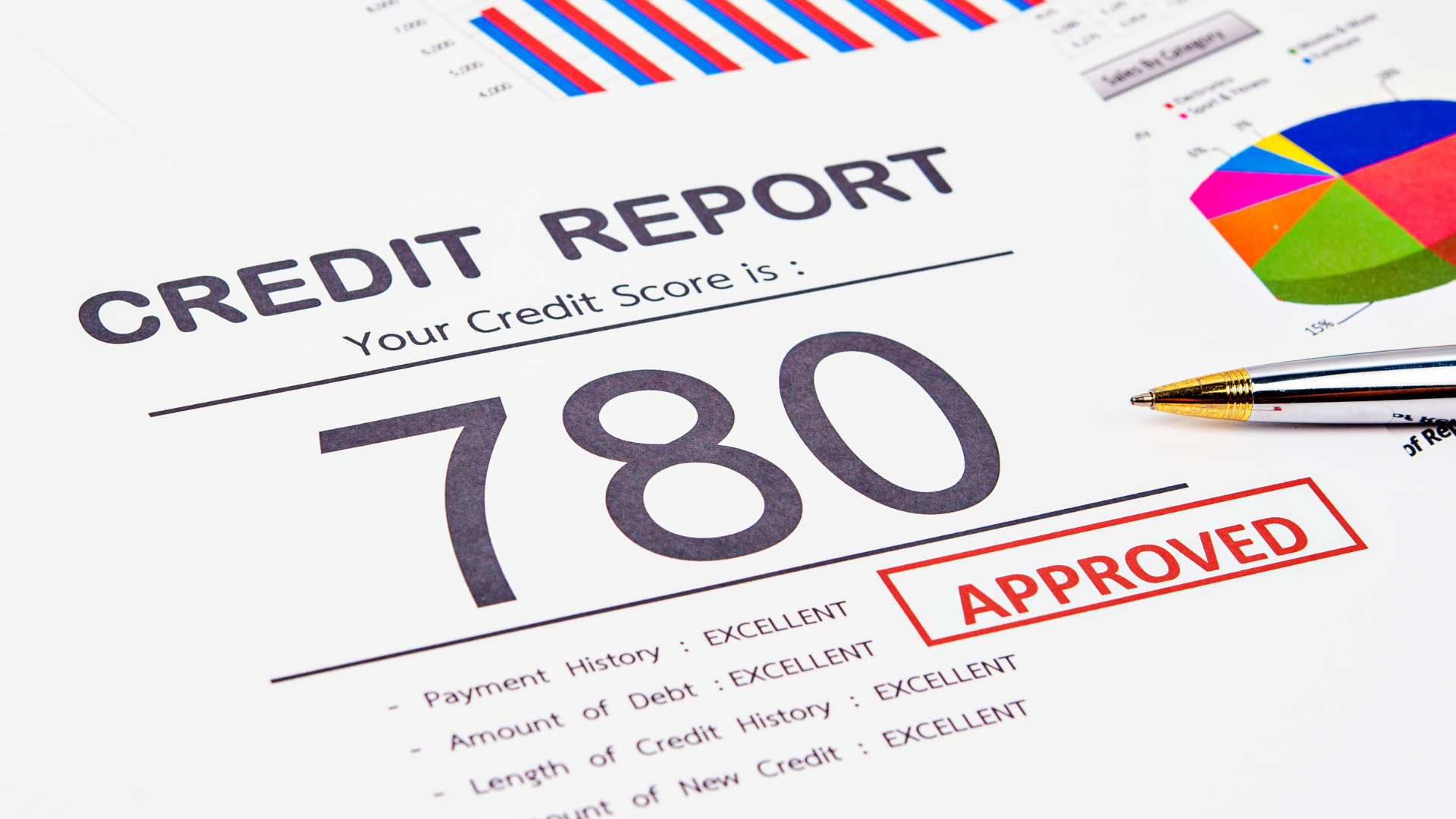
Here is something that catches a lot of small business owners off guard: your business has its own credit score, completely separate from yours. Not an extension of your personal credit. Not a variation of your FICO score. A fully independent credit profile that lenders, vendors, and suppliers are already checking before they decide whether to work with you.
Note: Ruproa is not affiliated with Dun & Bradstreet, does not supply Paydex scores or D-U-N-S numbers, and does not report to them. You register for a D-U-N-S number with D&B directly, and it is free. Ruproa reads and reports to Creditsafe and Equifax Business.
Most people find this out at exactly the wrong time, when a vendor denies them net-30 terms, or a loan officer asks for their business credit report and they have nothing to show. If you are reading this before that happens, you are in a good position. This guide covers everything you need to know to understand, check, and start building your small business credit score.
What Is a Small Business Credit Score?
A small business credit score is a number that reflects your business's financial credibility as a standalone entity. It tells anyone evaluating your business how reliably it pays its obligations, how long it has been active, and how much financial history it has built up under its own name.
Think of it as your business having its own financial reputation. That reputation is built not through your personal spending habits or your mortgage payments, but through how your business handles its vendor accounts, business credit lines, and financial obligations tied directly to your company's EIN (Employer Identification Number).
There is not one single business credit score. Different bureaus track your business credit and calculate their own scores using their own models. A lender might look at your Dun & Bradstreet Paydex score. A supplier might pull your Experian Intelliscore. A bank evaluating your SBA loan application might run your FICO SBSS score, a lender-side score Ruproa does not supply. They are measuring different things with different scales, but they are all asking the same underlying question: is this business financially trustworthy?
The scores typically run on a scale of 1 to 100, with some models like the FICO SBSS scoring on a 0 to 300 range. Higher is always better, and the higher your score, the more doors open: better vendor terms, easier loan approvals, lower insurance rates, and the ability to grow your business without constantly putting your personal finances on the line.
One thing worth knowing early: if you have never actively built business credit, you probably do not have a meaningful score yet. That is not a problem. It just means you are starting from a clean slate, which is actually a good place to be.
How Small Business Credit Scores Differ from Personal
Most business owners assume their personal credit and business credit are tied together, or at least that one feeds the other automatically. They are not, and they do not. Here is what actually separates them.
Different identification numbers
Your personal credit is built under your Social Security Number. Your business credit is built under your EIN and your business's legal name. That distinction is the foundation of the separation.
Different bureaus
Personal credit is tracked by Equifax, Experian, and TransUnion. Business credit is tracked by Dun & Bradstreet, Experian Business, Equifax Business, and CreditSafe. Some of those names look familiar, but these are entirely separate systems with separate databases and separate reports.
Different scoring models
Your personal FICO score weighs factors like credit utilization, length of credit history, and total debt. Business credit scores, particularly the D&B Paydex, focus almost entirely on one thing: how quickly your business pays its vendor invoices relative to the agreed payment terms. Other models like Experian's Intelliscore bring in additional variables like outstanding balances and industry risk, but the emphasis and the math are fundamentally different.
Different privacy rules
Your personal credit report is protected. Someone cannot pull it without your permission. Your business credit report is largely public. A vendor, competitor, potential partner, or investor can look up your business credit profile without asking you. What is in there is visible, which is another reason to know what it says before anyone else does.
Different building strategies
Personal credit grows through your individual accounts, credit cards, and loans. Business credit grows through accounts opened in your business's name, vendor tradelines that report to business bureaus, and business financial activity tied to your EIN. Simply using a business credit card linked to your SSN does not build business credit the right way.
Here is the practical upside of keeping them separate: when your business has its own strong credit profile, lenders evaluate the business on its own merits. Your personal credit score does not get pulled for every business financing decision. Your personal financial life stays protected from your business's risk, and your business can access capital based on what it has built, not on what you have personally.
Which Bureaus Track Small Business Credit?
Several major bureaus track and report business credit in the United States, plus a separate scoring model used specifically in SBA lending. Ruproa reports to Creditsafe and Equifax Business, with more bureaus on the way. Each one operates independently, which means a vendor or lender may check one, two, or several depending on what they need.
Dun & Bradstreet (D&B): Paydex Score
Dun & Bradstreet is the most widely recognized and the one most vendors reference. Their primary score is the Paydex, which runs from 1 to 100 and is based almost entirely on payment timeliness. A score of 80 means you pay on time; above 80 means you consistently pay early. To have a Paydex score, your business needs a DUNS number, a unique nine-digit identifier D&B assigns to businesses, which you can register for free on dnb.com. Ruproa does not issue DUNS numbers or report to D&B. D&B requires at least two suppliers, each reporting a minimum of three payment experiences, before they will generate a score
Experian Business
Experian tracks business credit through their Intelliscore Plus model, scoring from 1 to 100. This model pulls in more variables than Paydex, including outstanding balances, credit utilization, company size, industry risk, and the number of active tradelines. Experian maintains profiles on a wide range of U.S. businesses, and your company may already have a listing even if you have never checked.
Equifax Business
Equifax calculates three separate scores for small businesses: a Payment Index (0 to 100) based on payment history, a Business Credit Risk Score that predicts the likelihood of serious delinquency, and a Business Failure Score that estimates the probability of business closure. The Equifax score Ruproa surfaces on your dashboard is the OneScore for Commercial, which runs from 300 to 650. Each one tells a different story to a lender or partner evaluating your business.
CreditSafe
CreditSafe scores on a 0 to 100 range and is increasingly used by vendors, international partners, and B2B suppliers. Their data includes payment history, credit utilization, and company registration information.
FICO SBSS (Small Business Scoring Service)
Building your profile across more than one bureau is the strongest strategy. A business that only has a file at one bureau looks like a blank slate to a supplier who checks another. Coverage across bureaus means your business's financial credibility shows up wherever someone decides to look.
The SBA historically required a minimum FICO SBSS score of 155, later raised to 165 in June 2025, for its 7(a) Small Loan prescreening process. As of March 2026, the SBA formally ended the FICO SBSS prescreening requirement for new applications, though many lenders continue to use it independently as part of their underwriting. If you are pursuing SBA financing, it is worth checking current lender requirements. Many now set their own internal minimums well above the old SBA floor, commonly in the 165–180 range
Building your profile across more than one bureau is the strongest strategy. A business that only has a file at one bureau looks like a blank slate to a supplier who checks another. Coverage across bureaus means your business's financial credibility shows up wherever someone decides to look.
Business Credit Score Range Explained
Unlike personal credit, business credit does not follow a single universal scale. Each bureau sets its own range. Here is a straightforward breakdown of what the numbers mean across the major bureaus and scoring models.
D&B Paydex (1–100)
80–100: Low risk. Pays on time or early. Strong standing with lenders and vendors.
50–79: Moderate risk. Some late payments. May face stricter terms.
0–49: High risk. Significant payment delays. Difficulty accessing credit.
Experian Intelliscore Plus (1–100)
76–100: Low risk
51–75: Low to medium risk
26–50: Medium to high risk
0–25: High risk
Equifax commercial risk scoring
Higher scores represent the lowest risk. The Equifax score Ruproa surfaces is the OneScore for Commercial, on a 300 to 650 scale
Scores above 750 are generally considered low risk
Scores below 600 typically indicate moderate to elevated lending risk
CreditSafe (1–100)
71–100: Very low risk
51–70: Low risk
30–50: Moderate risk
21–29: High risk
1–20: Very high risk
FICO SBSS (0–300)
165+: The former SBA prescreening floor; most lenders now look for 175–180+ for actual approval
155–164: Previously accepted by some lenders under the old SBA minimum
Below 140: Likely to face challenges with most small business loan applications
One important thing to know: scores vary not just by bureau, but by how much data each bureau has on your business. A business with two tradelines reporting to one bureau might have a strong score there and no profile at all somewhere else. Building across more than one bureau gives your business the broadest possible financial credibility.
How to Check Your Small Business Credit Score
Ruproa monitors your business credit at Creditsafe and Equifax Business, with more bureaus on the way, from a single dashboard. Instead of logging into multiple platforms and piecing together what you find, you get a consolidated view of where those scores stand and how they are moving. Ruproa also reports your payment activity to those bureaus automatically each month, so your profile builds in the background while you focus on running your business.
When you pull your reports for the first time, look carefully at three things. First, confirm that your business information is listed accurately across the bureaus you monitor, including your legal business name, address, and EIN. Errors in basic identifying information can cause lenders to pull incorrect reports. Second, check whether any tradelines are reporting. If nothing is reporting, your scores are either very low or do not exist yet. Third, look for any errors, unfamiliar accounts, or derogatory entries. Business credit report errors are more common than most owners realize and can be disputed with each bureau directly.
Steps to Build Your Small Business Credit
If you are starting from zero, or if your current profile is thin, here is a practical starting point.
1. Establish your business as a separate legal entity
Your business needs to be properly registered, have its own EIN, a dedicated business bank account, and a business phone number listed under the business name. These are the foundational elements bureaus use to recognize your business as a distinct, credible entity.
3. Get your DUNS number
If you do not have DUNS number yet, register for free on dnb.com, directly with D&B. This is the gateway to your D&B Paydex score, which Ruproa does not supply, and many vendors and government contractors will ask for it.
4. Open accounts that report to business bureaus
Not all vendors report payment activity to business credit bureaus, but many do. Net-30 vendor accounts with suppliers who report to D&B, Experian, or Equifax are one of the most accessible ways to start building tradelines. You do not need perfect credit to open these accounts. You just need to start, pay on time, and let the reporting do its work.
5. Pay early whenever you can
The D&B Paydex score rewards early payment with higher scores, not just on-time payment. A business that consistently pays invoices before the due date will score above 80. One that pays exactly on time typically scores right around 80. Paying early is one of the fastest ways to push your score into the strongest range.
6. Monitor your reports consistently
Errors happen, reporting delays happen, and unauthorized inquiries happen. Catching these early prevents them from doing damage before a lender or vendor sees them. Monthly monitoring is not overkill. It is standard practice for any business that is serious about its credit standing.
7. Be patient and consistent
Most businesses see meaningful progress within three to six months of opening their first reporting tradelines. A well-rounded business credit profile with multiple accounts across multiple bureaus typically takes one to two years to build. That timeline is normal and worth it.
The businesses that show up to a loan application or a vendor negotiation with a strong, established business credit profile are the ones that get better rates, better terms, and more options. That advantage does not happen by accident. It is built deliberately, one on-time payment at a time.
Frequently Asked Question
Here are quick answers to the questions small business owners ask most often about building and checking their credit.
Does my business automatically have a credit score?
No. Unlike personal credit, which starts building as soon as you open a credit account, business credit has to be actively built. Your business needs a DUNS number, an EIN, and tradelines reporting payment activity to the bureaus before a score can be generated.
Can I build business credit without a good personal credit score?
Yes, with some conditions. Many starter vendor accounts and net-30 accounts do not require a personal credit check, which means you can begin building business tradelines even if your personal credit is not in great shape. Some lenders, particularly those looking at larger financing, may still check personal credit alongside your business profile, especially in your early stages.
How long does it take to build business credit?
Most businesses start seeing meaningful progress within three to six months of opening their first tradelines and having them report consistently. A solid business credit profile with multiple tradelines across bureaus typically takes one to two years to develop. The key is starting with the right accounts and making sure they report.
What is a tradeline?
A tradeline is any account that appears on your business credit report, such as a vendor account, business credit card, or loan that reports payment activity to the bureaus. Each tradeline that shows on-time payments strengthens your score. That is why the first step in building business credit is opening accounts that actually report.
Does applying for business credit hurt my personal credit score?
It depends on the type of account. Many business vendor accounts (especially net-30 accounts at office supply companies or business-to-business suppliers) do not require a personal credit pull. Business credit cards typically do run a personal credit inquiry, which can have a temporary minor impact.
What if my business does not have a DUNS number?
You can request one for free directly through Dun & Bradstreet's website. It typically takes a few business days to process. A DUNS number is required to build a Paydex score, and it is often asked for by government contractors and larger vendors, so claiming yours early is worth doing.
Can I dispute errors on my business credit report?
Yes, and you should if you find any. Each bureau has its own dispute process. D&B allows disputes through their business profile portal. Experian and Equifax both have dispute procedures on their business credit sites. Monitoring your report consistently (ideally monthly) is the best way to catch errors early before they affect your funding options.
Start Building Before You Need It
The single most common mistake small business owners make with business credit is waiting until they need it. By the time a lender asks for your business credit report, it is too late to build one quickly.
The good news is that starting early is not complicated. It is just a matter of putting the right accounts in place, making sure they report, and keeping your payment history clean.
→ Read next: How to Improve Your Business Credit Score: a step-by-step breakdown of the exact actions that move the needle, starting from your first tradeline.
Your business credit profile is being built whether you are paying attention to it or not. Make sure what is being built is working in your favor.
See how Ruproa tracks your business credit at Creditsafe and Equifax Business: one dashboard, automated monthly reporting, and the tools to build your profile the right way.