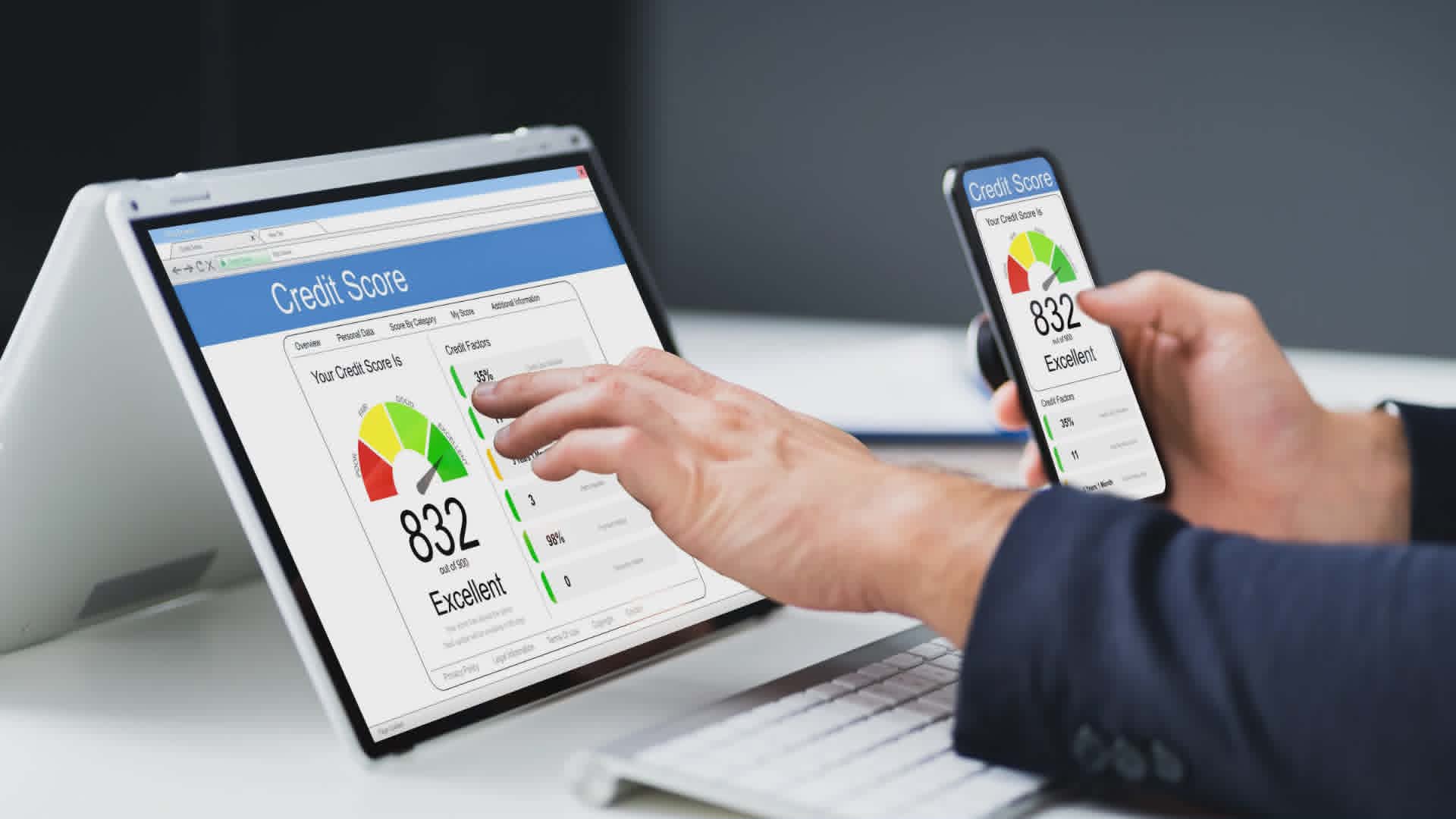
Your Paydex score is a business credit score developed by Dun & Bradstreet (D&B) that measures how promptly your business pays its vendors and suppliers. It runs on a scale of 1 to 100, with higher scores reflecting faster payment. A score of 80 is the key benchmark, indicating you pay invoices on time. Unlike personal credit scores, Paydex focuses solely on payment speed, not overall debt levels. If you are building business credit through net-30 accounts or trade references, your Paydex score is one of the first indicators lenders and vendors will check on your business credit report. Paydex belongs to D&B: Ruproa is not affiliated with D&B, does not supply Paydex scores, and does not report to them. Ruproa reports to Creditsafe and Equifax Business, with more bureaus on the way.
What Is Paydex Score?
The D&B Paydex score is one of the most widely used business credit scores in the country. Lenders, vendors, and suppliers check it when deciding whether to extend credit, approve a business loan, or offer favorable payment terms. If you have ever wondered why some businesses seem to get better deals with vendors while others get stuck paying upfront, the Paydex score is often part of the answer.
Dun & Bradstreet calculates this score based on trade payment data reported by your vendors and suppliers. Every time a business pays an invoice, that payment is potentially reported to D&B and factored into the Paydex calculation. The score only measures one thing: how fast you pay. It does not account for how much debt your business carries, your revenue, or your credit utilization. That makes it uniquely focused compared to other business credit scores.
To have a Paydex score at all, your business needs a DUNS number, which is a nine-digit identifier assigned by D&B. You also need at least two suppliers to have reported a minimum of three trade payment experiences to D&B. Without that threshold of data, D&B does not have enough to generate a score.
How the Paydex Score Is Calculated
D&B calculates your Paydex score using a dollar-weighted average of your payment experiences. That means larger invoices carry more weight than smaller ones. If you pay a $10,000 invoice two weeks late but consistently pay $500 invoices on time, that large late payment will pull your score down more than you might expect.
Here is the general framework D&B uses to assign Paydex values based on payment timing:
Paying 30 or more days early scores at 100
Paying early enough to take a discount scores at 90
Paying exactly on the due date scores at 80
Paying 15 days late scores at 70
Paying 16 to 30 days late scores at 50
Paying beyond 30 days late drops the score progressively lower
This is what makes the Paydex score different from almost every other scoring model. You are not just trying to avoid being late. You can actively improve your score by paying early. That is a real opportunity that many small business owners miss.
D&B updates Paydex scores monthly as new payment data comes in. If your vendors do not report to D&B, those payments will not help your score even if you pay perfectly every time. This is why working with vendors that actively report to D&B matters, or using a platform that handles that reporting for you.
Ruproa's Auto Monthly Reporting submits your payment activity to Creditsafe and Equifax Business every month automatically, with more bureaus on the way, so every on-time payment builds those profiles without extra work on your end. Learn more at ruproa.com.
Paydex Score Range Explained (1-100)
The Paydex score range runs from 1 to 100. Understanding where your score falls helps you know what lenders and vendors are likely to think when they pull your business credit report.
Paydex Score | Payment Behavior | What It Signals to Lenders |
80 - 100 | Pays on time or early | Low risk – strong candidate for credit |
50 - 79 | Pays 15 to 30 days beyond terms | Moderate risk – acceptable but improvable |
1 - 49 | Pays 30+ days beyond terms | High risk – limited access to credit and vendor terms |
Most lenders and vendors consider an 80 Paydex score the minimum threshold for good standing. At 80, your business is paying invoices as agreed, which signals reliability. Scores above 80 reflect early payment habits and are particularly attractive to lenders who are evaluating your business for financing.
Scores below 50 indicate consistent late payment behavior, which can affect your ability to open new net-30 vendor accounts, qualify for business loans, or negotiate net payment terms with suppliers.
What Is a Good Paydex Score?
The short answer: 80 is good, and anything above 80 is better. A Paydex score of 80 means your business pays invoices on time, which is the baseline expectation most lenders and vendors hold. If you are consistently hitting 80 or higher, you are in solid territory.
That said, a Paydex score of 80 is a floor, not a ceiling. Businesses with scores in the 90 to 100 range are paying invoices well before the due date, which signals strong cash flow and financial discipline. Some lenders specifically look for scores in that range when evaluating applications for larger lines of credit or favorable terms.
If your score is currently below 80, that does not mean you are in trouble. It means you have a clear, measurable target and a straightforward path to hit it. The score only tracks payment timing, so improving it is directly within your control.
How to Improve Your Paydex Score
Because the Paydex score is based entirely on payment timing, your improvement strategy is focused and actionable. You do not need to pay down debt or fix a complicated credit profile. You need to build a history of on-time and early payments, reported by vendors who actually submit data to D&B.
1. Pay early whenever possible
On-time payments get you to 80. Consistent early payments push you above it. D&B's scoring framework rewards paying 20 or more days ahead of the due date, which corresponds to a score in the 90 range. Aim to pay vendor invoices at least two to three weeks early rather than just a day or two, since D&B assigns score values based on defined early-payment thresholds. Larger invoices carry more weight in the calculation, so prioritizing early payment on your bigger vendor bills has the most impact.
2. Open net-30 accounts with D&B-reporting vendors
Not all vendors report to D&B. Seek out net-30 accounts with suppliers that actively report payment experiences to Dun & Bradstreet. These are sometimes called starter vendors or business credit vendors. Net-30 accounts in categories like office supplies, shipping, and business services often extend terms without requiring an established credit history, making them a practical starting point for building your D&B credit file.
3. Build multiple active tradelines with at least two suppliers
D&B needs payment data from at least two different suppliers, with a minimum of three trade experiences reported, before it can generate a Paydex score. If you are just getting started, opening net-30 accounts with two or three reporting vendors and managing those payments consistently is your first priority. More tradelines, all paid on time, give D&B more data to work with and create stronger trade references on your D&B credit file.
4. Make sure your vendors are actually reporting
This is one of the most overlooked steps. You can pay perfectly for years, but if your vendors are not submitting payment data to D&B, none of it counts toward your Paydex score. Many small business owners build what they think is a strong payment history, only to find their business credit report is still thin because their vendors never reported a single trade reference. Check with your vendors or use a platform that handles bureau reporting on your behalf.
5. Monitor your Paydex score regularly
Errors in business credit reporting happen. A payment that was submitted late by a vendor, an account reported incorrectly, or data attributed to the wrong business can drag your score down without you knowing. Monitoring your D&B profile means you can catch and dispute errors before they affect your funding opportunities.
Ruproa's monitoring dashboard tracks your business credit scores at Creditsafe and Equifax Business every month, with more bureaus on the way. Your Paydex score is not among them, since that one sits with D&B, but you will always know what these lenders are seeing.
Paydex vs. Other Business Credit Scores
The Paydex score is not the only business credit score lenders use. Understanding how it compares to other scoring models helps you see the full picture of your business credit profile.
Experian Business Intelliscore Plus
Experian's primary business credit score runs from 1 to 100, similar to Paydex, but it incorporates a broader range of factors including payment history, credit utilization, company size, and industry risk. It is widely used by lenders and suppliers.
Equifax Business Credit Risk Score
Equifax produces several business credit scores on different scales, each predicting the likelihood of a business becoming severely delinquent on payments. They pull from a range of financial data including trade payment experiences and public records. The Equifax score Ruproa surfaces on your dashboard is the OneScore for Commercial, which runs from 300 to 650.
CreditSafe Business Score
CreditSafe provides business credit scores on a 0 to 100 scale, with 100 being the lowest risk. It is used heavily in B2B credit decisions and international trade.
FICO SBSS (Small Business Scoring Service)
The FICO SBSS is used primarily by SBA lenders and ranges from 0 to 300. It is a lender-side score that Ruproa does not supply or track. Unlike Paydex, it blends business credit data with personal credit information and business financials, making it a broader assessment of creditworthiness.
The key difference between Paydex and most other business credit scores is its singular focus. Paydex only looks at how fast you pay. That makes it more predictable to manage but also means it does not tell the whole story of your business credit health. Lenders evaluating your business will often look at multiple bureau scores alongside each other, which is why building your profile across more than one bureau matters.
Frequently Asked Questions
If you are new to business credit, you probably have questions about how the Paydex score works and what it means for your business. Here are answers to the most common ones.
What is a Paydex score?
A Paydex score is a business credit score issued by Dun & Bradstreet that measures how promptly a business pays its trade obligations. Scores range from 1 to 100, with higher scores indicating faster payment. A score of 80 means you pay invoices on time; scores above 80 reflect early payment behavior.
What is a good Paydex score?
A Paydex score of 80 is generally considered the benchmark for good standing, reflecting on-time payments. Scores between 80 and 100 indicate early payment habits and are viewed favorably by lenders and vendors. Scores below 50 suggest consistent late payments and may limit access to credit and favorable net-30 vendor terms.
How is the Paydex score calculated?
D&B calculates the Paydex score using a dollar-weighted average of your payment experiences. Larger, more recent invoices carry more weight than smaller ones. The score reflects how quickly you pay relative to invoice due dates, with on-time payment scoring at 80, payment 15 days late at 70, and payment 16 to 30 days late at 50. Scores continue to drop the further beyond terms a payment falls. To have a score generated, your business needs a DUNS number and at least two suppliers that have reported a minimum of three trade payment experiences to D&B.
How do I improve my Paydex score?
The most direct way to improve your Paydex score is to pay your vendor invoices on time or, better yet, consistently early by 20 or more days. You should also open net-30 accounts with vendors who report to D&B, ensure you have at least two suppliers reporting trade references to your D&B credit file, and monitor your D&B profile regularly for reporting errors. Every payment reported on time or ahead of schedule moves your score in the right direction.
What is the difference between a Paydex score and a FICO score?
A Paydex score is a business credit score issued by Dun & Bradstreet that measures only payment timing on trade accounts. A FICO score is a personal credit score that incorporates payment history, credit utilization, credit age, and other factors across your personal accounts. The FICO SBSS is a separate score used for small business lending that blends business and personal credit data, and it ranges from 0 to 300 rather than 1 to 100.
Do I need a DUNS number to have a Paydex score?
Yes. A DUNS number is the unique nine-digit identifier D&B uses to track your business. You need one before D&B can build a credit file for your company. DUNS numbers are free to obtain through the D&B website, though processing can take several weeks depending on your request type. Once you have a DUNS number and at least two suppliers have reported trade payment experiences, D&B can generate your Paydex score.
Start Building Your Business Credit Profile
Ready to build a stronger payment record? Ruproa monitors your business credit at Creditsafe and Equifax Business and reports your payment activity to them automatically every month, with more bureaus on the way. Paydex itself stays with D&B, but the habit that moves it, paying early and consistently, is the same habit these bureaus reward. Start building your business credit profile at Ruproa.